
Blog Post
Dead Lead Reactivation: Home Improvement Contractor Reveals $90K Loss
Dead Lead Reactivation: Home Improvement Contractor Reveals $90K Loss
Most home improvement contractors follow up with new leads just once or twice before giving up—and that single mistake costs them roughly $90,000 in monthly revenue. Here's what happens to those "dead" leads you've already paid for, and why AI might recover what traditional sales teams can't.
Key Takeaways
Home improvement contractors lose approximately $90,000 monthly in potential revenue from unaddressed 'dead' leads that have already been paid for through marketing efforts.
Studies show that businesses following up within an hour are seven times more likely to qualify leads, yet most contractors follow up only once or twice before abandoning potential customers.
AI-powered lead reactivation systems can automatically revive dormant leads through smart SMS sequences, voice agents, and review generation without additional marketing spend.
The shift to AI search platforms changes how homeowners research contractors, creating new opportunities for transparent, education-focused marketing approaches.
Performance-based AI solutions focus on actual sales results rather than vanity metrics, ensuring contractors only pay for measurable revenue growth.
Every month, home improvement contractors watch thousands of dollars in potential revenue slip through their fingers. The culprit isn't failed marketing campaigns or poor lead quality—it's the systematic abandonment of leads that contractors have already paid to acquire. This hidden revenue leak represents one of the most significant yet overlooked profit opportunities in the residential construction industry.
The Hidden Revenue Leak That Can Cost Contractors $90K or More Monthly
The mathematics behind lost contractor revenue tell a sobering story. A typical mid-size roofing or remodeling company generates leads monthly through various marketing channels—paid advertising, SEO efforts, referral programs, and lead generation platforms. Each of these leads represents a marketing investment, whether it's $50 from a Google Ad click or $200 from a premium lead service.
Here's where the revenue leak becomes catastrophic: most contractors follow up with new leads only once, maybe twice, before moving on to the next prospect. The average job profit in home improvement ranges from $5,000 to $15,000, depending on the project scope. With consistent, intelligent follow-up, those abandoned leads translate to missed jobs monthly.
The calculation is stark: missed jobs multiplied by average profit equals significant lost revenue every single month. Companies like Axis AI have developed specialized systems to address this exact problem, focusing on reactivating leads that contractors have already invested in acquiring.
Why Dead Leads Cost More Than Failed Marketing Campaigns
The Real Math Behind Lost Revenue
The financial impact of ignored leads extends beyond simple multiplication. Consider the true cost of customer acquisition: marketing spend, sales team time, administrative overhead, and opportunity cost. When a lead goes cold without proper follow-up, contractors lose not just the potential sale but also the entire investment made to generate that initial interest.
Industry data reveals that acquiring a new customer costs five to seven times more than reactivating an existing lead or previous customer. This means that every abandoned lead represents wasted marketing dollars that could have been recovered through systematic follow-up processes. The compound effect over 12 months can exceed $1 million in lost revenue for established contractors.
Industry Follow-Up Failure Statistics
Research consistently shows that businesses following up within the first hour are seven times more likely to qualify leads compared to those waiting even 24 hours. Yet most home improvement contractors operate with follow-up systems that are inconsistent at best and nonexistent at worst.
The construction industry faces unique challenges that contribute to poor follow-up rates: field work demands immediate attention, administrative resources are limited, and sales teams often prioritize hot leads over nurturing warm prospects. A significant portion of leads—research indicates up to 73% of leads—aren't ready to buy immediately, highlighting the critical importance of long-term nurturing strategies that most contractors simply don't implement.
AI Search Changes Everything for Home Improvement Marketing
How Homeowners Research Contractors in 2026
The landscape of contractor discovery has fundamentally shifted with the rise of AI search platforms like Google's AI Overviews, ChatGPT, and Perplexity. Homeowners no longer simply type "roofer near me" and call the first three results. Instead, they're asking detailed, specific questions that reveal their exact needs and concerns.
Modern searches include queries like "How much does a roof replacement cost in Baltimore with GAF Timberline shingles?" or "What's the best shingle for a low-slope roof in Maryland?" These AI search tools are trained to reward brands that provide transparent, educational, multi-format answers—articles, videos, infographics, and podcasts—that directly address specific homeowner concerns.
This shift creates tremendous opportunity for contractors who understand how to position themselves as educational authorities rather than just service providers. The contractors who consistently appear in AI search results win jobs before potential customers even pick up the phone.
The Transparency Advantage
Homeowners in 2026 demand maximum information before committing to conversations with contractors. They dislike high-pressure sales tactics and want to avoid wasting time on calls that don't lead anywhere productive. This preference for transparency has led to emerging features like Google's "Online Estimate" buttons appearing at the top of local search results.
These tools allow homeowners to enter their address, answer questions about project specifics, and receive instant price ranges along with options to book confirmation calls. Smart contractors take advantage of this demand for transparency by providing AI-powered online estimators and educational content that builds trust before the first conversation occurs.
The AI-Powered Lead Reactivation System That Works
1. AI-Enhanced SMS Follow-Up Sequences
Modern AI texting systems go far beyond generic automated messages. These platforms analyze lead behavior, previous interactions, and response patterns to craft personalized follow-up sequences that sound natural and conversational. The AI learns the specific language and tone that resonates with each contractor's customer base.
For example, an AI system might send: "Hey Jeff, thanks for checking out our roof pricing tool. Based on what you entered, you're looking at a $12,000-$15,000 range. Want me to send over some shingle samples or book a quick call to nail down the details?" The system then continues nurturing the lead over weeks or months with contextually relevant messages.
2. AI Voice Agents for Call Management
Missing calls during peak business hours represents a massive revenue leak for busy contractors. AI voice agents handle incoming calls 24/7, capturing lead information, answering basic questions, scheduling site visits, and transferring qualified prospects to human team members when appropriate.
These systems maintain conversation transcripts, update CRM records automatically, and ensure that no potential customer falls through communication gaps. The AI agent speaks naturally, understands industry terminology, and can handle complex scheduling scenarios without human intervention.
3. Automated Review Generation
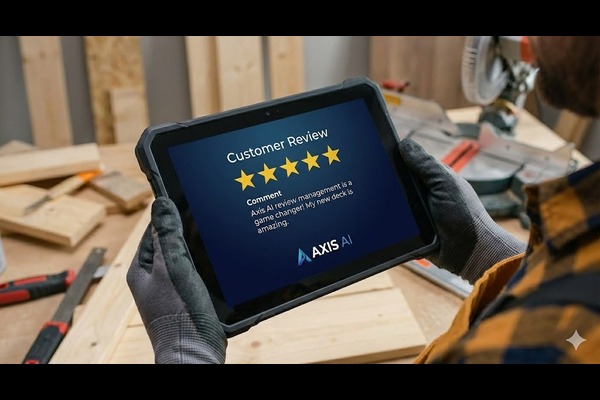
Consistent Google reviews are critical for contractor visibility and credibility, yet most companies struggle with review generation because manual requests are time-consuming and often forgotten. AI-powered review systems identify the optimal moments to request feedback—typically immediately after job completion when customer satisfaction is highest.
The system sends personalized text messages that make review requests feel natural and appreciate rather than pushy. It can also follow up with customers who haven't left reviews and manage the entire reputation management process without staff involvement.
4. Online Estimate Integration
AI-powered online estimators provide homeowners with ballpark pricing based on their specific project parameters. These tools capture detailed lead information while delivering the transparency that modern customers expect. The estimates integrate seamlessly with follow-up systems, allowing for personalized outreach based on project specifics and budget ranges.
Real Contractor Results: Before vs After AI Implementation
Case Study Example: How AI Can Transform a Mid-Size Roofing Company
Before AI implementation, a competitive mid-size roofing company typically spent $10,000-$15,000 monthly on lead generation, resulting in a CRM filled with over 1,200 old leads from the previous 12 months. Follow-up was inconsistent—perhaps a text message or two before moving on to newer prospects. Google reviews arrived sporadically because no team members had time to actively request them. Missed calls happened daily during busy periods. Revenue remained flat despite increasing advertising investments, creating a declining return on ad spend.
After integrating AI systems, the transformation was measurable and immediate. The AI text agent reactivated dormant leads, booking additional appointments monthly. The AI voice agent handled incoming calls, ensuring no prospects were lost due to timing or availability issues. The automated review system generated consistent 5-star Google feedback without staff involvement. Educational content began appearing in AI search results, increasing organic visibility without additional advertising dollars.
ROI Without Additional Ad Spend
The most compelling aspect of AI lead reactivation is that it generates revenue from existing assets rather than requiring additional marketing investment. Contractors typically recover significant monthly revenue that was previously lost by simply maximizing the value of leads they've already paid to acquire.
This approach delivers immediate return on investment because it converts costs that were previously sunk into recoverable revenue streams. Implementation of automated AI follow-up systems for dormant leads can significantly increase booked appointments for remodeling companies.
Common Lead Management Mistakes AI Fixes Automatically
Following Up Once Then Giving Up
The most prevalent mistake contractors make is assuming that one or two follow-up attempts represent adequate effort. Research shows that sales typically require five to twelve touchpoints, yet most contractors abandon leads after minimal contact. This approach treats symptoms rather than addressing the systematic follow-up process required for consistent conversion.
AI systems eliminate this problem by maintaining consistent, intelligent contact over extended periods. The technology doesn't get distracted, forget to follow up, or decide that a lead isn't worth pursuing. It systematically nurtures every prospect according to proven conversion sequences.
Manual Review Requests Nobody Has Time For
Requesting reviews manually creates an administrative burden that most contractor teams simply cannot maintain consistently. The optimal timing for review requests—immediately after successful job completion—often conflicts with moving on to the next project or handling other urgent business matters.
Automated systems solve this timing problem by triggering review requests at precisely the right moments without human intervention. The AI manages the entire process, from initial requests to follow-up messages for customers who haven't responded.
Missing Calls During Peak Hours
Contractors often receive the most calls during business hours when teams are actively working on job sites. Missing these calls means losing potential customers to competitors who are available to answer. Traditional solutions like hiring additional administrative staff create overhead costs that may not justify the investment.
AI voice agents provide 24/7 availability without staffing costs. They can handle multiple calls simultaneously, capture detailed information, schedule appointments, and transfer urgent matters to appropriate team members. This ensures that no revenue opportunities are lost due to timing or availability constraints.
Stop Losing Revenue You Already Paid For—Start Today
The transformation from losing significant monthly revenue to recovering that revenue through AI-powered lead reactivation isn't theoretical—it's happening right now for contractors who understand that the biggest opportunity lies in maximizing existing assets rather than constantly chasing new leads.
Dead leads aren't actually dead; they're simply ignored. The investment has already been made to generate initial interest. The challenge lies in maintaining systematic, intelligent follow-up that converts that interest into scheduled appointments and closed sales. AI technology solves this challenge by automating the entire nurturing process while maintaining the personal touch that customers expect.
The contractors who implement these systems in 2026 will build sustainable competitive advantages while their competitors continue throwing money at lead generation without addressing the fundamental follow-up failures that prevent revenue conversion. The question isn't whether AI will transform the home improvement industry—it's whether individual contractors will adopt these tools before their competition discovers the same opportunities.
Learn how Axis AI helps residential roofing and remodeling contractors recover lost revenue through AI-powered lead reactivation at https://www.axisai.us.
