
Blog Post
Why Google's AI Pre-Screening Reputation Kills Leads Before Prospect Contact
Why Google's AI Pre-Screening Reputation Kills Leads Before Prospect Contact
If you're a home improvement contractor wondering why your phone isn't ringing despite a 4.9-star rating, Google's AI might be killing your leads before customers even see your website. Here's what changed in 2025—and why your competitors are suddenly getting all the calls.
Key Takeaways
Google's AI Overviews now pre-screen businesses based on review recency, response times, and sentiment before homeowners even visit company websites
Approximately 40% of local business searches trigger AI-generated summaries that can eliminate contractors from consideration instantly
Businesses with more than nine recent reviews (within 90 days) earn 52% more revenue, while outdated reviews signal to AI that companies have "lost their touch"
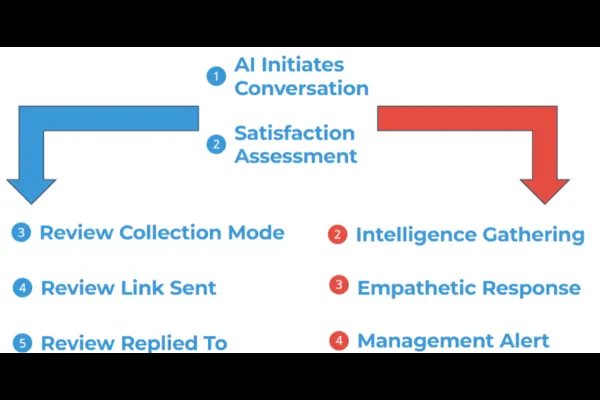
Automated review management systems can transform online reputation into a 24/7 lead generation machine by intercepting problems before they go public
High-value home improvement customers conduct extensive research, making fresh reviews and professional responses critical for winning $75K+ projects
The home improvement industry has entered a new era where artificial intelligence determines which contractors get noticed and which get ignored. Google's AI systems are now making snap judgments about businesses before potential customers ever pick up the phone, fundamentally changing how contractors must approach their online reputation.
Google's AI Now Pre-Screens Your Business Before Customers Call
When homeowners search for "best roofing contractor near me" in 2025, they're no longer seeing the traditional local pack first. Google's AI Overviews, powered by advanced language models like Gemini, appear at the top of search results, providing instant summaries of contractor reputations based on online reviews.
This represents a fundamental shift in how customers find home improvement services. The AI doesn't simply list business names—it actively analyzes and summarizes reputation data, making preliminary decisions about which contractors deserve attention. Approximately 40% of local business queries now trigger AI-generated content at the top of search results, meaning nearly half of potential customers receive pre-filtered information before they even consider contacting a business.
The AI scans multiple data points simultaneously: review recency, response patterns, overall sentiment, and engagement levels. If a contractor's last five-star review dates back to 2023, Google's AI may inform potential customers that "while [Your Company] has a high rating, recent customer feedback is limited compared to [Competitor]." Axis AI specializes in helping home improvement contractors adapt to this new AI-driven environment, ensuring their online reputation works as a 24/7 lead generation system.
The Silent Revenue Killer: How AI Overviews Judge Your Reputation
1. Recent Review Activity Determines AI Visibility
Google's AI operates on the assumption that recent activity equals business vitality. A contractor might maintain a 4.9-star rating, but if those reviews accumulated over several years without recent additions, the AI interprets this as a red flag. The system assumes businesses receiving consistent recent feedback are more active, reliable, and worthy of recommendation.
This creates a "recency bias" that favors contractors who systematically collect fresh reviews. The AI doesn't distinguish between a well-established company that simply doesn't prioritize review collection and a declining business losing customers. Both appear identical in the AI's analysis—businesses with stagnant feedback patterns.
2. Response Time Becomes a Ranking Signal
Google rewards active engagement with reviews, which improves local search rankings. While 20% of consumers expect a response within 24 hours, quick responses are vital for customer satisfaction and conversion. The algorithm views rapid, professional responses as indicators of a healthy, operational business that values customer feedback.
Contractors who fail this "Engagement Test" find themselves at a significant disadvantage. The AI interprets delayed or missing responses as signs of poor customer service or business neglect. This creates a compounding effect where businesses with inconsistent response patterns gradually lose visibility in AI-generated summaries.
3. Review Sentiment Analysis Affects Trust Scores
Google's AI uses sophisticated sentiment analysis to evaluate emotions within reviews, going beyond simple star ratings. The system analyzes language patterns, specific complaints, and praise points to create trust scores. Positive sentiments mentioning specific services like "clean job site" or "excellent communication" boost rankings, while negative language patterns can harm visibility.
The AI also identifies recurring themes across reviews. If multiple customers mention similar problems, the system flags these as potential service gaps. Conversely, consistent praise for specific aspects of service delivery strengthens the business's AI-generated profile.
Why High-Value Home Improvement Leads Choose Your Competitors
Extensive Research Drives High-Value Project Decisions
Customers considering $75,000 kitchen renovations or full-envelope exterior overhauls conduct extensive research before making contact. These aren't impulse purchases—they're significant investments requiring careful contractor selection. Approximately 90% of consumers looking for contractors check online reviews, and 92% will only contact businesses with 4-star ratings or above.
High-value customers seek the "safest bet" rather than the cheapest option. They analyze contractor reputations thoroughly, comparing recent feedback, response quality, and service consistency. When a competitor maintains 15 fresh reviews from the past 90 days describing clean job sites and excellent communication, while another contractor shows scattered old reviews, the choice becomes obvious.
Fresh Reviews and Star Ratings Both Drive Customer Trust
The combination of review volume, recency, and quality creates a powerful trust signal for potential customers. Businesses with more than nine recent reviews (within 90 days) earn 52% more revenue than average, demonstrating the direct correlation between review activity and business growth.
However, volume alone isn't sufficient. Customers want recent validation that contractors maintain consistent service quality. A steady stream of detailed, recent reviews provides the social proof necessary to convert high-value leads into actual projects.
The Hidden Cost of Manual Review Management
1. Inconsistent Response Timing Hurts Customer Satisfaction
Manual review management creates inevitable delays and inconsistencies that damage customer relationships. Business owners juggling multiple responsibilities often respond to reviews sporadically—sometimes within hours, other times after weeks have passed. This inconsistency sends mixed signals to both Google's AI and potential customers.
Customers who leave reviews expect acknowledgment, especially when they've taken time to provide detailed feedback. Delayed responses suggest the business doesn't value customer input, potentially turning satisfied customers into neutral ones and neutral customers into disappointed ones.
2. Inconsistent Review Collection Timing
Most contractors rely on manual processes for requesting reviews, leading to missed opportunities and irregular collection patterns. Project completion represents the optimal moment for review requests—when customer satisfaction peaks and project details remain fresh. Manual systems often miss this critical window, resulting in lower response rates and less detailed feedback.
The inconsistency creates gaps in review timelines that Google's AI interprets as business volatility or declining activity. Steady, systematic review collection demonstrates ongoing business health and customer satisfaction.
3. Generic Responses That Don't Boost SEO
Many contractors default to generic responses like "Thanks for the review!" which provide no SEO value or meaningful customer engagement. These brief acknowledgments miss opportunities to reinforce keywords, mention specific services, or demonstrate professional communication skills.
Professional, detailed responses that reference specific services (roofing, bathroom renovation, exterior work) provide SEO benefits while showcasing expertise. Generic responses waste the opportunity to improve search visibility and demonstrate thought leadership.
How Automated Review Systems Intercept Problems Before They Go Public
AI-Powered Sentiment Detection
Advanced automated systems use AI to analyze customer responses and detect potential dissatisfaction before it reaches public review platforms. These systems can identify neutral or negative sentiment in initial customer communications, triggering immediate intervention protocols.
When the system detects concerning feedback, it automatically routes the information to management for rapid response. This early warning system allows contractors to address issues while customer relationships remain salvageable, preventing negative reviews and preserving reputation.
Professional Response Generation Within Minutes
Automated systems generate professional, personalized responses within minutes of review publication. These responses incorporate specific details from the original review, mention relevant services, and maintain consistent brand voice across all interactions.
The speed and quality of automated responses demonstrate professional management and active customer engagement. This consistent responsiveness improves Google AI rankings while building stronger customer relationships through timely acknowledgment.
Turn Your Google Reviews Into a 24/7 Lead Generation Machine
The most successful contractors treat their review systems as automated lead generation tools rather than reactive reputation management. By systematically collecting recent reviews, responding professionally within hours, and intercepting problems before they escalate, contractors create a self-reinforcing cycle of improved visibility and increased lead quality.
This approach transforms Google reviews from a defensive necessity into an offensive marketing weapon. Fresh, detailed reviews with professional responses create the social proof necessary to win high-value projects while simultaneously improving AI-driven search visibility.
The contractors who adapt to AI-driven search behavior will dominate local markets, while those clinging to outdated reputation management approaches will find themselves increasingly invisible to their most valuable prospects. The choice isn't whether to accept automated review management—it's whether to lead the transition or fall behind competitors who recognize the new reality. Axis AI helps home improvement contractors transform their online reputation into a powerful lead generation system through automated review management and AI-driven customer engagement.
